
· by Michael Blair, Nashville's Handyman Service
A front door that lets in a cold draft in November is usually missing one of two things: a seal around the jamb that still touches the door, or a sweep that still touches the threshold. Both wear out, and both are small jobs, but only if the door itself sits right in its frame.
Here is how we find the leak, why the door is adjusted first, and how the seals and the sweep are fitted as part of our general home repairs.
How do you tell where a door is leaking air?
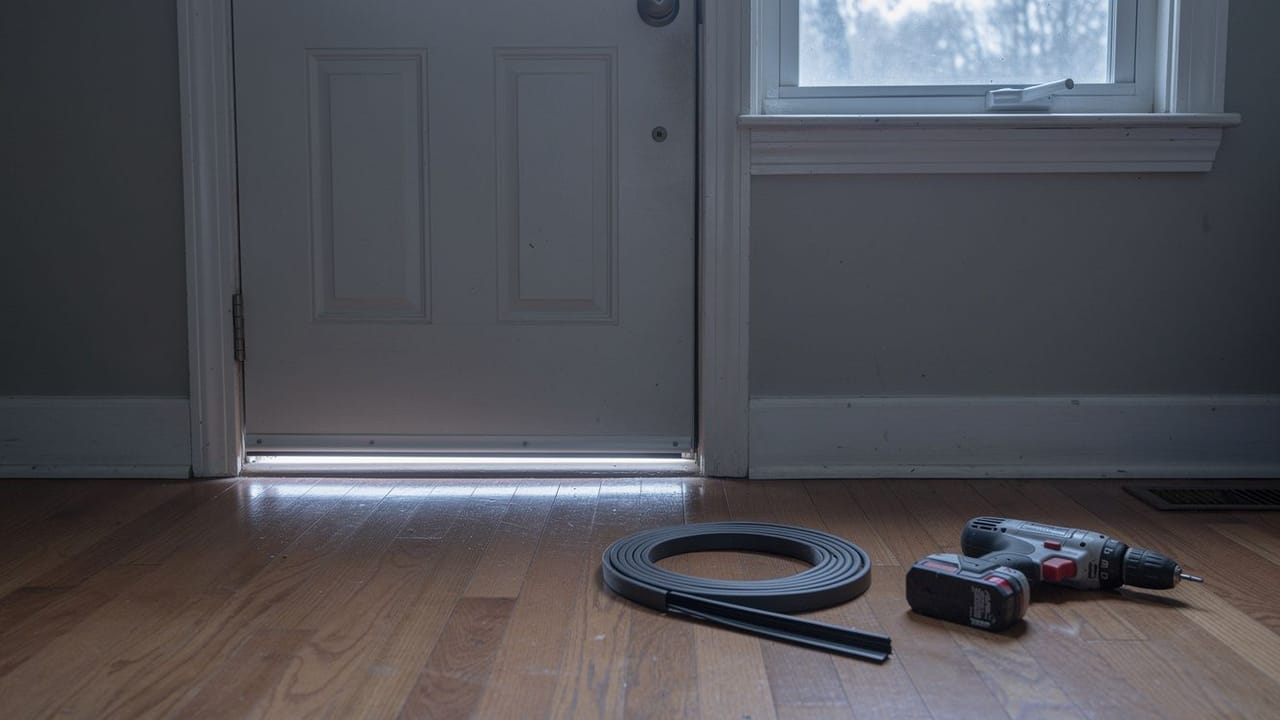
Close the door and look for daylight around it, then check whether it rattles or moves when pushed shut. The Department of Energy’s weatherization job aid, Install Weatherstripping on an Exterior Door, names visible daylight and a loose-fitting door as the common signs of air leakage.
We check the jamb sides, the head and the bottom separately, because each has its own seal. A worn strip on the latch side, a crushed corner at the top and a sweep that no longer reaches the threshold are the usual finds. Doors that open onto a garage, an attic or a porch count too: the Building America Solution Center’s guide to door sweeps says doors next to unconditioned spaces should be treated as exterior doors.
Why does the door get adjusted before new weatherstripping?
The door is adjusted first because new weatherstripping cannot seal a door that is not sitting square in its frame. The DOE job aid says to make adjustments such as tightening loose hinges, knobs and strike plates before the weatherstripping goes on, and its checklist sets two goals together: cut the air leakage and keep the door working, adjusting the door as needed so it fits the jamb and still opens easily.
In Middle Tennessee the gap often changes with the seasons, because wood doors and frames swell in humid summers and shrink in dry winters. A door that drags in July can show light in January. Our post on doors that stick covers the hinge screws and strike adjustments that fix the fit, and those come before any new seal.
How is weatherstripping fitted around the jamb?
Weatherstripping is measured for each side and the head of the frame, cut so the pieces meet tightly at the top corners, and fastened so it touches the closed door all the way around. The DOE job aid walks through it: measure each side of the doorway and the top or bottom, notch the ends of the side pieces so they fit tight against the head piece when the maker has not, set each piece on a thin bead of caulk lined up with its screw holes, and fasten it with the short screws supplied.
Many newer doors carry a strip that presses into a slot in the stop instead, and that kind pulls out and is replaced with a matching profile. Whichever it is, the job aid ends the same way, and so do we: open and close the door, and adjust until it operates smoothly and the seal still meets it.
How to install a door sweep
A door sweep is cut to the full width of the door, set level with its edge touching the threshold, and screwed on so it can still be adjusted later. The Building America guide lists the types, from aluminum, rubber and brush sweeps to ones that snap into a slot in the door bottom, and says to make sure the sweep suits the door’s thickness. It also warns that gaps at either end invite mice.
Its steps match ours: pry out or unscrew the old sweep, cut the new one with a hacksaw and the vinyl with a knife, level it, mark the centers of the holes, drill pilot holes without going through the door, and test before tightening. The door should close without much resistance while the sweep presses the threshold firmly. We fit seals and sweeps in Hendersonville and across Middle Tennessee; to have a drafty door sealed, send us the details.
Sources
- U.S. Department of Energy, Weatherization Installer Job Aid 11-1: Install Weatherstripping on an Exterior Door (DOE/GO-102023-5934) — Daylight and loose fit as signs of leakage; adjust hinges, knobs and strike plates first; measure, notch, caulk and screw the weatherstripping; keep the door operating smoothly.
- Building America Solution Center (PNNL, U.S. Department of Energy), Install or Replace Door Sweeps — Sweep types; doors to garages, attics and porches treated as exterior; full-width measurement and rodent gaps; removal of kerf sweeps; leveling, pilot holes, touching the threshold without gaps.
FAQ
Weatherstripping a Drafty Door: Seals and Sweep — questions
What is the most common sign a door needs new weatherstripping?
Daylight around the closed door, or a door that fits loosely and rattles. The Department of Energy’s weatherization job aid names both as common signs of air leakage. Before replacing the seals, tighten loose hinges, knobs and strike plates, because a door that does not sit square in its frame will leak through new weatherstripping too.
Should a door sweep touch the threshold?
Yes. The Building America Solution Center’s guide says to set the sweep level with its bottom edge touching the threshold, then adjust it so there is no gap. The door should still open and close without much resistance while the sweep presses firmly against the threshold, so test before tightening the screws.
Does the door from the garage need weatherstripping?
Yes. The Building America Solution Center says doors that open onto unconditioned spaces such as garages, attics and porches should be treated as exterior doors. That means the same jamb seals and a sweep or threshold seal, so air from the garage does not pass into the house around the door.
How do you remove an old door sweep that snaps into the door?
A sweep that snaps into a slot in the bottom of the door can usually be pried out with a flat-head screwdriver or a small pry bar, according to the Building America Solution Center. Screwed sweeps are unscrewed, and adhesive ones pulled off, warming stubborn glue with a hair dryer first.