
· by Michael Blair, Nashville's Handyman Service
A good handyman is the most useful trade contact a homeowner has, and there are jobs they cannot take regardless of how capable they are. The line is drawn by state and Metro licensing and by which work requires a permit, and knowing where it falls protects you as much as it protects them.
Where does the licensing line fall for a handyman?
Statewide, the line is money. The Tennessee Board for Licensing Contractors’ contractor license page requires a license before anyone bids or negotiates a price on a project of $25,000 or more, and it applies the same figure to electrical, mechanical, plumbing, HVAC and roofing subcontractors on their portion of a job. Some counties draw a lower line. The board’s Home Improvement license page requires that license for residential remodeling and repair from $3,000 to $24,999 in the counties that adopted the law. Davidson and Rutherford are on its list, so the rule reaches jobs in Nashville and Murfreesboro; Williamson, Wilson, Sumner and Maury are not. A Home Improvement licensee also posts a $10,000 surety bond and shows proof of general liability and workers’ compensation insurance.
Inside Metro Nashville a third line ignores project size. Metro’s 2008 plumbing ordinance, BL2008-292, requires a license of anyone doing plumbing work, and it defines that work to include repair, maintenance and servicing of any plumbing system. Its 2013 electrical ordinance, BL2013-570, requires a Metro license or registration for any electrical work that needs an electrical permit, and Metro’s mechanical, plumbing and electrical examiners board also tests for gas and appliance, HVAC and mechanical certificates. Where the state handles permits and inspections instead, the board’s limited licensed plumber and limited licensed electrician licenses cover those trades on jobs under $25,000, and plumbing maintenance under $500 is exempt from the plumber’s.
The practical test in Davidson County is the permit. Metro’s code enforcement page says only properly licensed contractors may obtain permits or perform that work. The one exception is the owner: a homeowner may be permitted to work on their own residence, and electrical, plumbing or mechanical work by a homeowner has to be approved by the Chief Inspector or the appropriate Metro board. A handyman cannot borrow that route for a client’s house, so one who offers to skip the permit on work that needs it is handing you the risk, whatever the price.
What work can a handyman do without a permit?
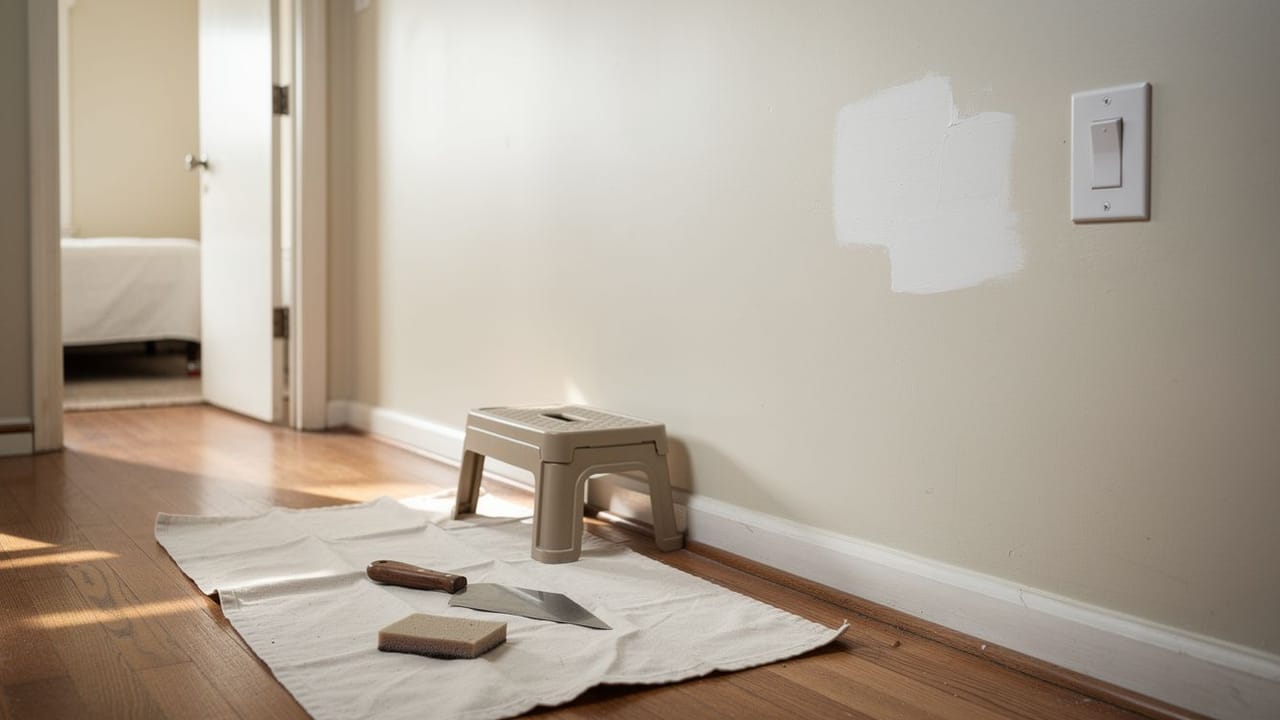
Repairs and replacements that do not alter a system. Metro’s code enforcement page puts it plainly: repairs of a general, maintenance type need no permit, and its examples are replacing light switches, window panes and damaged siding. The permit table on Metro’s page for renovating a single-family house adds painting and wallpaper, gutters and downspouts, wall tile, new insulation, and a replacement door in an opening that does not change. Drywall carries a limit: repairing or replacing more than 100 square feet of it takes a permit, which is why most drywall patches stay on the handyman side and a whole sagging ceiling may not.
Mounting a television, rehanging a cabinet door, sealing around a bath, fixing a sagging gate and assembling furniture do not appear in that table at all. A large amount of what actually goes wrong in a house is on that list, which is why the trade exists. The value is a single competent person for the pile of small jobs that no specialist wants to travel for, and our general repairs are built around exactly that pile.
- Drywall patching under 100 square feet
- Painting, caulking and trim repairs
- Light switch replacements and doors in the same opening
- Door, gate and hardware adjustment
- Gutter cleaning and minor exterior carpentry
What needs a licensed trade
Electrical work that needs a permit: Metro’s renovation table lists relocating a fixture, switch or outlet, an attic fan and smoke detectors, and we treat the panel, new circuits and new wiring in the walls the same way. Plumbing, which Metro licenses for repair and servicing as well as new work; relocating a plumbing fixture also takes a permit, though replacing a dishwasher or garbage disposal does not. Water heaters are a narrower case than people think. Metro’s water heater repair guidelines, written for heaters damaged by water, say replacing a residential 50-gallon heater generally needs no permit, while changing the fuel type, gas to electric for example, does. A ducted cooktop, a fireplace insert, a wood stove and an exhaust fan all take Metro’s gas and mechanical permit, and the code enforcement page requires a permit to install any heating, air conditioning or ventilation system.
Structural work is the category people underestimate, and what it needs first is a permit. Metro’s table requires one to remove any wall, load-bearing or not, and to replace a structural element such as a joist, rafter or stud. Metro’s deck permit page requires one to build or replace a deck, to replace its footings or framing, or to replace more than 100 square feet of deck boards. Whatever the wall looks like from the living room, taking it out is a permit job.
Why it matters to you rather than to them
Insurance first. Ask whether the person carries liability insurance before the work starts. A Home Improvement licensee has already shown the state proof of general liability and workers’ compensation coverage; for anyone else, the question is yours to ask. Your own homeowner’s policy may treat unlicensed or unpermitted work differently, so read it or call your agent, and our post on what an insurance certificate proves covers how to check the other side.
Then the house itself. Work that needed a permit and never got one was never inspected, and nobody can tell you what is behind a finished wall without opening it. If you are not sure which side of the line a job falls on, send us the list and we will say which items we can take and which need a licensed trade.
Sources
- Tennessee Board for Licensing Contractors, Contractor — License required before bidding or negotiating on projects of $25,000 or more; electrical, mechanical, plumbing, HVAC and roofing subcontractors at $25,000 or more of their portion
- Tennessee Board for Licensing Contractors, Home Improvement Contractor — Home Improvement license for residential work from $3,000 to $24,999 in Bradley, Davidson, Hamilton, Haywood, Knox, Marion, Robertson, Rutherford and Shelby; $10,000 surety bond; general liability and workers’ compensation required
- Metro Nashville Council, Ordinance BL2008-292 (plumbing licensing, 2008) — Anyone doing plumbing work in Metro must be licensed; plumbing work includes repair, maintenance and servicing; own-residence exception
- Metro Nashville Council, Ordinance BL2013-570 (electrical licensing, 2013) — Electrical work that needs an electrical permit must be done by a Metro-licensed or registered person
- Metro Codes, Mechanical, Plumbing, and Electrical Examiners and Appeals Board — Examines for gas and appliance, HVAC&R, master mechanical, plumbing and electrical certificates
- Tennessee Board for Licensing Contractors, Limited Licensed Plumber (LLP) — Required where the state is the permit authority, for work under $25,000; general maintenance under $500 exempt
- Tennessee Board for Licensing Contractors, Limited Licensed Electrician (LLE) — Required where the state is the permit authority, for work under $25,000
- Metro Codes, Property Standard Code Violation Types — General maintenance repairs need no permit (light switches, window panes, damaged siding); only licensed contractors may obtain permits; homeowner exception; permits for heating, air conditioning and ventilation installs
- Metro Codes, I Want to Renovate a Single-Family Residence — Permit table: drywall over 100 sq ft, wall removal, structural carpentry, fixture relocation and gas/mechanical items need permits; painting, gutters, wall tile and door replacement in the same opening do not
- Metro Codes, Guidelines for Repair of Water Heaters Exposed to Water Damage (2021) — A residential 50-gallon replacement generally needs no permit; changing the fuel type does
- Metro Codes, I Want to Add a Deck or Patio to a Residence — Permits for new or replacement decks, footings or framing, and deck board replacement over 100 sq ft
FAQ
What a Handyman Cannot Legally Do Here — questions
Can a handyman replace a light fixture in Tennessee?
Metro Nashville lists replacing a light switch as a general maintenance repair that needs no permit, and its renovation table requires a permit to relocate a fixture, switch or outlet. A straight fixture swap on the same box is not named either way, so ask Metro Codes before assuming. Adding a fixture, moving a box, running new cable or touching the panel is work we leave to a licensed electrician.
Does a handyman need to be licensed in Tennessee?
It depends on the size of the job, the county and the kind of work. Statewide, a contractor license is required on projects of $25,000 or more. In Davidson, Rutherford and the other counties that adopted the Home Improvement law, residential remodeling from $3,000 to $24,999 needs a Home Improvement license. Inside Metro Nashville, plumbing work and permitted electrical work need a Metro license at any size. Small repairs under all of those lines are handyman territory, and liability insurance is still worth asking about.
What should I ask before hiring one?
Proof of current liability insurance, whether the job needs a permit and who will pull it, and, on a residential job of $3,000 or more in Davidson or Rutherford County, the Home Improvement license number. If someone says no permit is needed on a job Metro plainly lists, such as removing a wall or relocating an outlet, that is the point to stop rather than to negotiate.
How does a handyman get licensed in Tennessee?
It depends on the work. For residential jobs from $3,000 to $24,999 in counties like Davidson and Rutherford, the state Board for Licensing Contractors issues a Home Improvement license, which takes a $10,000 surety bond and proof of liability and workers’ compensation insurance. Plumbing, electrical and mechanical work in Metro Nashville goes through Metro’s examiners board.